The Limits of Power Strips
Most homeowners rely on individual power strip surge protectors to shield their electronics, and while these provide some protection, they have real limitations. A power strip protects only the devices plugged into it, leaving every other outlet in the home unprotected. It also degrades with each surge it absorbs, often without any visible indication that its protective capacity has been diminished. Appliances like refrigerators, HVAC systems, washers, dryers, and dishwashers are almost never plugged into surge protectors at all, yet they contain sensitive electronics that are just as vulnerable to surge damage as a television or computer. A whole-home surge protector installed at the electrical panel addresses all of these gaps in a single installation.
What Whole-Home Surge Protection Does
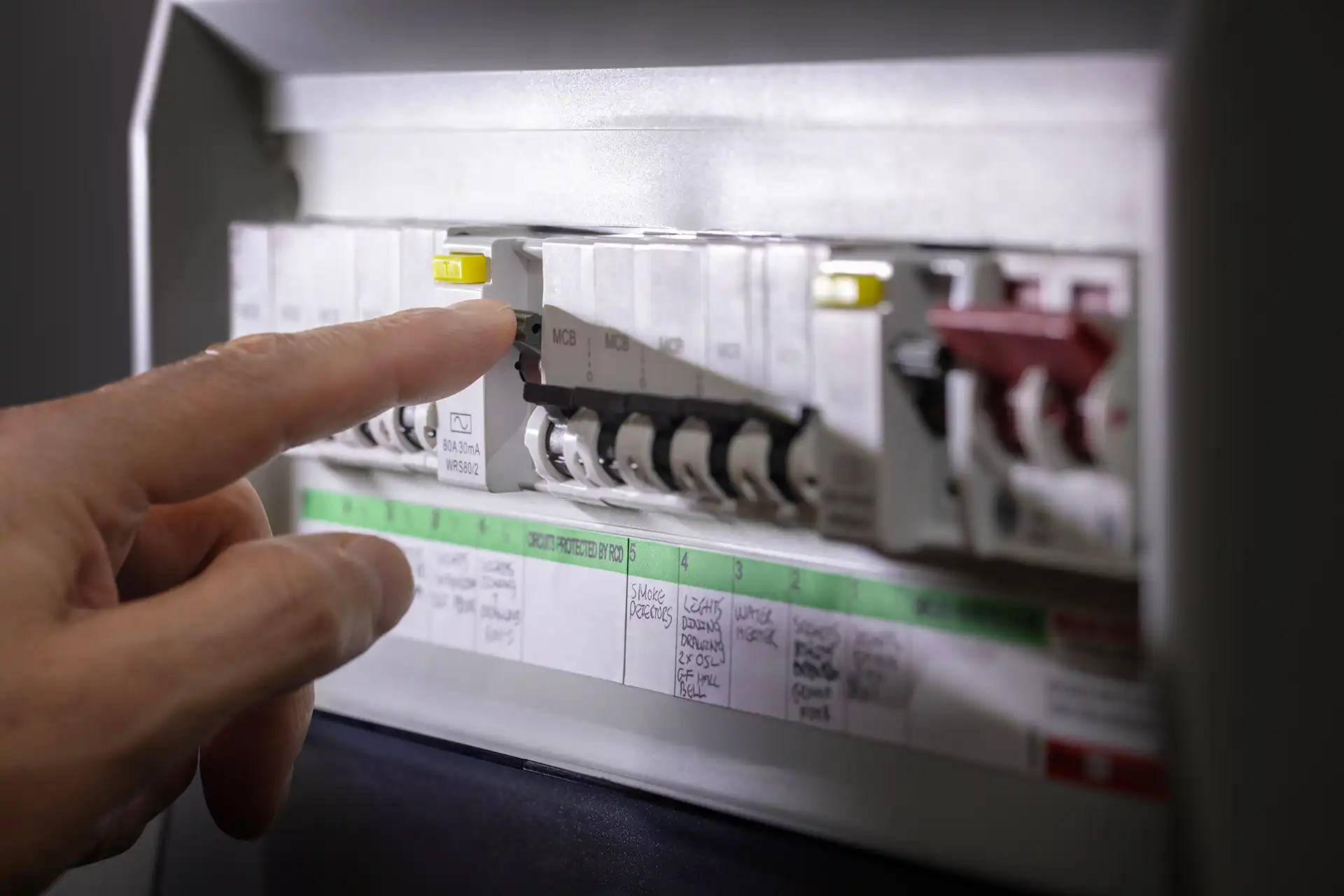
A whole-home surge protector is installed directly at the main electrical panel and monitors the voltage entering the home from the utility. When a surge is detected, the device diverts the excess voltage safely to ground before it can travel through the home’s wiring and reach connected devices. This protects every outlet, appliance, and hardwired system in the home simultaneously, including HVAC equipment, smart home devices, kitchen appliances, and entertainment systems. It works alongside rather than instead of individual power strips, and the combination of both layers of protection provides the most comprehensive coverage available.
Where Surges Come From
Most people associate power surges with lightning strikes, and while lightning can cause catastrophic surge damage, it accounts for a small fraction of the surges that affect residential electrical systems. The majority of surges are internal, generated by the cycling on and off of large appliances like air conditioners, refrigerators, and heat pumps within the home itself. Utility switching events, power restoration after an outage, and fluctuations on the grid are also common sources. These smaller, more frequent surges are rarely dramatic enough to notice, but they degrade sensitive electronics gradually over time. Whole-home surge protection guards against all of these sources, not just the lightning strike scenario.
A Modest Investment With Significant Protection
The cost of a whole-home surge protector installation is modest relative to the value of the electronics, appliances, and HVAC equipment it protects. A single surge event that damages a furnace control board, a refrigerator compressor, or a home entertainment system can easily exceed the cost of whole-home protection many times over. For homeowners who have recently invested in smart home technology, new appliances, or HVAC equipment, surge protection is one of the more straightforward ways to protect that investment.