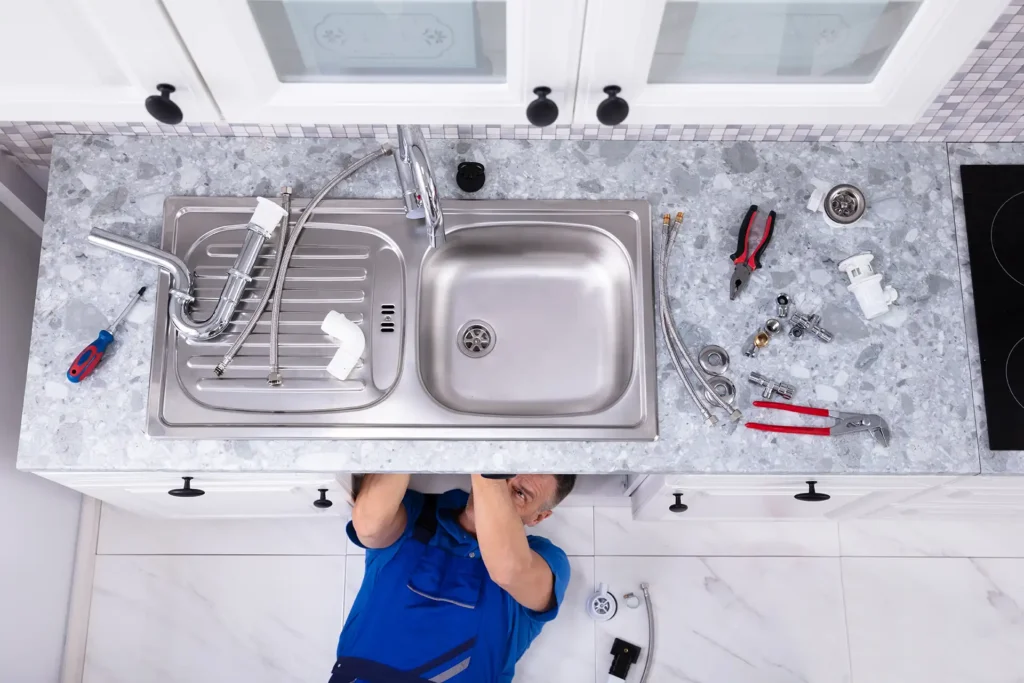
A puddle beneath the sink does not always mean the faucet is failing. Kitchen plumbing brings several water-supply and drain connections into a small space, so similar symptoms can have different causes. Five Star Heating, Cooling, Plumbing & Electrical helps Palatine and Arlington Heights homeowners understand those differences and plan the appropriate next step. A few careful observations can make the service conversation more useful without taking fittings apart or moving heavy appliances.
If water is actively leaking, stop using the affected fixture and describe the situation when you call (847) 250-6610. Open 24 hours a day, 7 days a week. Keep away from wet electrical equipment and avoid forcing a stuck shutoff valve. The goal is to explain what you can safely see, not to diagnose every part of the system yourself.
Start With When the Water Appears
Timing is one of the most helpful clues. Moisture that appears while a sink empties may involve a drain connection, while a supply connection can leak even when the faucet is off. A wet cabinet after a dishwasher cycle suggests another pattern worth reporting. Water can travel along hoses or surfaces, so the location of a puddle may not match the location of the leak. Note the timing without touching unfamiliar connections or running equipment that is causing damage.
Clear stored items from a dry, safe cabinet area so the plumber can see accessible plumbing. Describe recent fixture installation, appliance movement, or repair work. A photo taken from a safe position can help you remember an intermittent symptom. Our kitchen plumbing repair service evaluates sink plumbing and connected water lines, while faults inside an appliance may require an appliance specialist. Explain both symptoms if the appliance also has an operating problem.
A Slow Sink Is Different From a Supply Problem
A sink that fills faster than it drains points toward the drainage side of the system. Food debris, grease, or other buildup can restrict the trap or a downstream pipe. A disposal does not make every food scrap suitable for the drain. If the sink slows again soon after it was cleared, that pattern matters: the restriction may extend beyond the area previously addressed, or another drainage condition may need attention.
Tell the plumber whether the problem affects only the kitchen or several fixtures. Wastewater backing up elsewhere changes the scope of the investigation. Avoid repeatedly adding chemical drain products, and disclose anything already used before service begins. Five Star can discuss drain and sewer cleaning when the drainage path needs assessment. Stop using fixtures that cause an overflow; continuing to run water does not establish where the obstruction is located.
Separate Faucet Drips From Weak Water Flow
A faucet that drips after it is turned off may have a worn internal component. Water around the base or beneath the cabinet can involve different seals or connections. The faucet’s design, age, and overall condition influence whether a repair is practical. A drip alone does not automatically mean that the entire fixture should be replaced. Note whether the handle is difficult to operate or whether leakage occurs only in a certain position.
Weak flow is a separate symptom. Compare hot and cold water and whether other fixtures show a similar change. A restriction at one fixture differs from reduced flow throughout the home. If you recently noticed a change after plumbing work, include that detail. Faucet repair and leak assessment can help distinguish a serviceable fixture problem from a supply issue. Avoid repeatedly tightening parts, which can damage a connection without resolving the cause.
Look at Appliance Connections Without Moving Equipment
A refrigerator dispenser or ice maker depends on its water connection as well as components inside the appliance. Reduced flow may involve a filter, a restricted line, a valve, or an appliance fault. Check the manufacturer’s normal filter-maintenance instructions and report any recent refrigerator movement. Do not pull a heavy refrigerator out just to inspect the line: moving it may strain a connection, damage flooring, or create a new leak.
A dishwasher’s water supply and drain connections also need to suit the installation. A plumbing visit may address those connections, but it does not necessarily include motor, control, or internal appliance repairs. When arranging service, explain whether the issue is water on the floor, poor draining, or an appliance that will not operate. Keeping those observations separate helps determine which professional should evaluate the problem and avoids assuming that every kitchen fault has the same solution.
Know What a Repair Recommendation Should Explain
A useful assessment connects the observed symptom to a finding and a proposed repair. Ask which component is affected, whether surrounding connections are sound, and how the work will be checked afterward. An intermittent drain leak should be evaluated under relevant operating conditions rather than judged only while the sink is idle. Clarify any access requirements before work begins, especially where cabinetry, walls, or appliances limit the view of plumbing.
Replacement may make sense when a fixture has extensive damage, repeated problems, or unavailable parts, but the reason should be clear. Ask what the proposed scope includes and which work needs a separate arrangement, such as cabinet restoration or appliance service. Keeping a record of installed parts and maintenance guidance can help with future care. The right decision should follow the condition of the plumbing and your household’s needs rather than a guess based on one symptom.
Build a Simple Kitchen Plumbing Routine
Use a sink strainer, keep grease out of the drain, and follow the disposal manufacturer’s operating guidance. Periodically look beneath the sink for fresh moisture and leave enough space to see connections. After rearranging stored items, check that hoses have not been disturbed. These simple habits help you notice changes early, but they do not repair a damaged pipe or worn component. A recurring problem deserves an assessment even if it temporarily improves.
Five Star has served the community since 1981. For kitchen plumbing concerns in Palatine, Arlington Heights, and nearby communities, request a service appointment or call (847) 250-6610. Share what happens, when it happens, and which fixtures are affected. Those details give the service team a useful starting point for investigating the problem and explaining the available options.