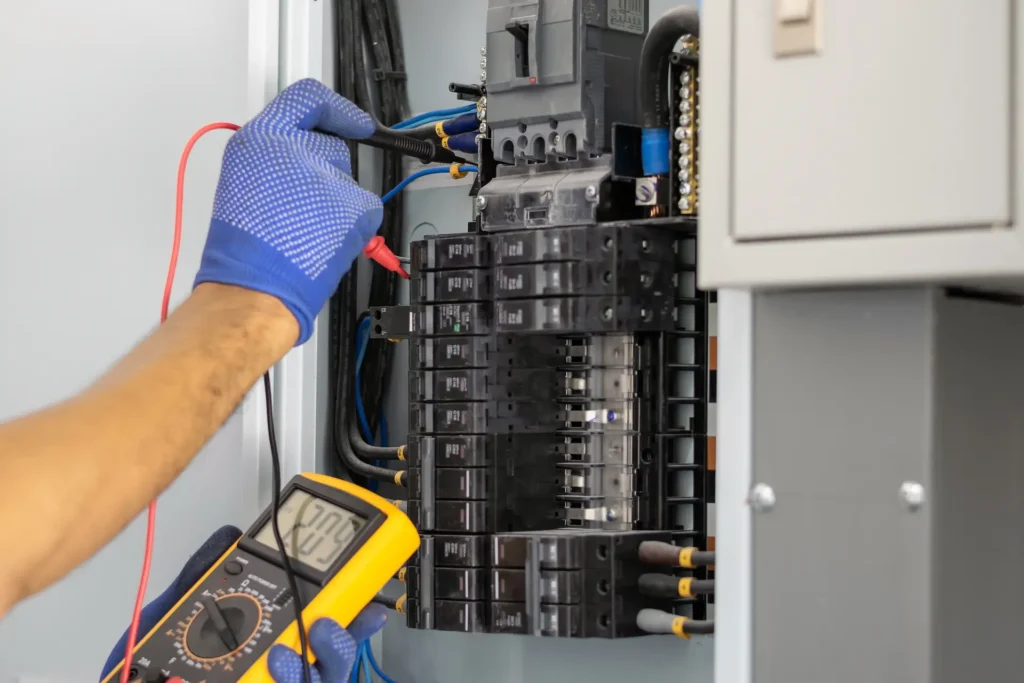
Five Star Heating, Cooling, Plumbing & Electrical helps Palatine homeowners plan electrical panel installation and upgrades around the way their homes use power. New appliances, a remodeled kitchen, or an electric vehicle can change the demand on an older electrical service. A panel assessment looks at available capacity, equipment condition, and the circuits serving your home. The right recommendation may involve a repair, a replacement panel, additional circuits, or a coordinated service upgrade rather than simply installing a larger box.
Call (847) 250-6610 to discuss your concerns and ask about the next available appointment.
When an Electrical Panel Deserves Attention
Frequent breaker trips, damaged components, missing circuit labels, or a panel with no suitable space for planned additions are reasons to arrange an assessment. These signs do not all mean the same thing. A breaker can trip because of a faulty appliance, a circuit problem, or excess demand on one circuit. Replacing the entire panel without checking the cause may leave the original issue unresolved. An electrician should consider both the panel and the circuits connected to it.
A planned project also creates a useful opportunity to review the service. Share the specifications for an EV charger, heat pump, cooking equipment, or workshop machinery before choosing a panel size. Our electrical inspection service can help identify conditions that affect the project. A clear list of existing and proposed equipment makes the evaluation more useful than estimating capacity from the number of empty breaker spaces alone.
Panel Replacement and Service Upgrades Are Different
A panel replacement changes the distribution equipment inside the home. A service upgrade changes the available electrical supply and may also involve the meter equipment, service conductors, grounding, and utility connection. The two projects are sometimes completed together, but they are not interchangeable. Installing a panel with a higher rating does not by itself increase the capacity of the upstream service. Every part of the system needs to be considered together.
Five Star reviews the existing installation and your planned loads before explaining the options. A load calculation evaluates expected demand using the applicable requirements; it is different from adding up every breaker rating. Depending on the findings, a subpanel or revised circuit arrangement may address space needs without increasing service capacity. A subpanel also does not create additional supply capacity. Understanding these differences helps you compare proposals that may otherwise sound similar.
Planning for Remodeling and New Equipment
Older Palatine homes can have electrical layouts designed before current kitchens, home offices, and charging equipment became common. That history is a reason to assess the installation, not proof that a specific upgrade is required. Consider both current needs and realistic future projects. Paying for capacity that your home cannot use is not helpful, but overlooking a planned addition can create avoidable rework when the next project starts.
Coordinate panel planning with electrical remodeling when walls or ceilings will already be open. Circuit routes, appliance locations, and access can affect the scope as much as the panel itself. Your estimate should explain which circuits are included, what work is excluded, and whether utility coordination or permits are part of the plan. Ask about the expected power interruption so you can prepare refrigerators, home-office equipment, and other essential loads.
How We Approach a Panel Project
The process begins with a review of the existing service, panel condition, grounding and bonding, circuit arrangement, and proposed equipment. We discuss the findings and the intended scope before installation begins. Required approvals and coordination depend on the work and the property. An assessment should identify these steps early rather than leaving you to discover them after equipment has been purchased or the project date has been set.
During installation, the electrician follows the approved scope, installs compatible equipment, and checks the completed connections and circuit identification. The final review should explain the new panel layout and any work still needed elsewhere in the home. Keep the project documentation, inspection records where applicable, and equipment information with your household records. Accurate labels are especially useful when a future repair requires one circuit to be isolated without interrupting unrelated parts of the home.
Repair a Circuit or Replace the Panel?
A localized problem may call for breaker replacement or circuit repair rather than a complete panel project. Breakers must be appropriate for the panel and wiring; a higher-rated breaker is not a safe shortcut for preventing repeated trips. Heat damage, corrosion, equipment defects, and insufficient capacity need their own assessment. The recommendation should connect the observed condition to the proposed repair, with enough explanation for you to understand the difference.
If the panel is suitable and has adequate capacity, a separate circuit or targeted wiring correction may be the practical choice. If the equipment is damaged or cannot support the planned work, replacement may make more sense. Whole-home surge protection can also be discussed during a panel project, but it serves a different purpose from overcurrent protection. It does not repair damaged wiring, prevent every electrical fault, or substitute for a sound electrical system.
Preparing for Your Panel Consultation
Make a list of recurring symptoms, planned equipment, and any electrical changes you know about. Keep the area in front of the panel accessible and avoid storing items against it. Do not remove the cover or touch internal components. If you notice smoke, sparking, or a burning smell, keep away and seek urgent assistance; do not wait for a routine project consultation or repeatedly reset a breaker that will not stay on.
Five Star can help you plan a panel improvement that fits your Palatine home and explain the work before it begins. Open 24 hours a day, 7 days a week. Scheduling and project duration depend on availability, the scope, and any required coordination. Call (847) 250-6610 to arrange an evaluation. Bring your equipment plans and questions so the conversation can focus on the capacity, safety, and installation details that matter for your home.