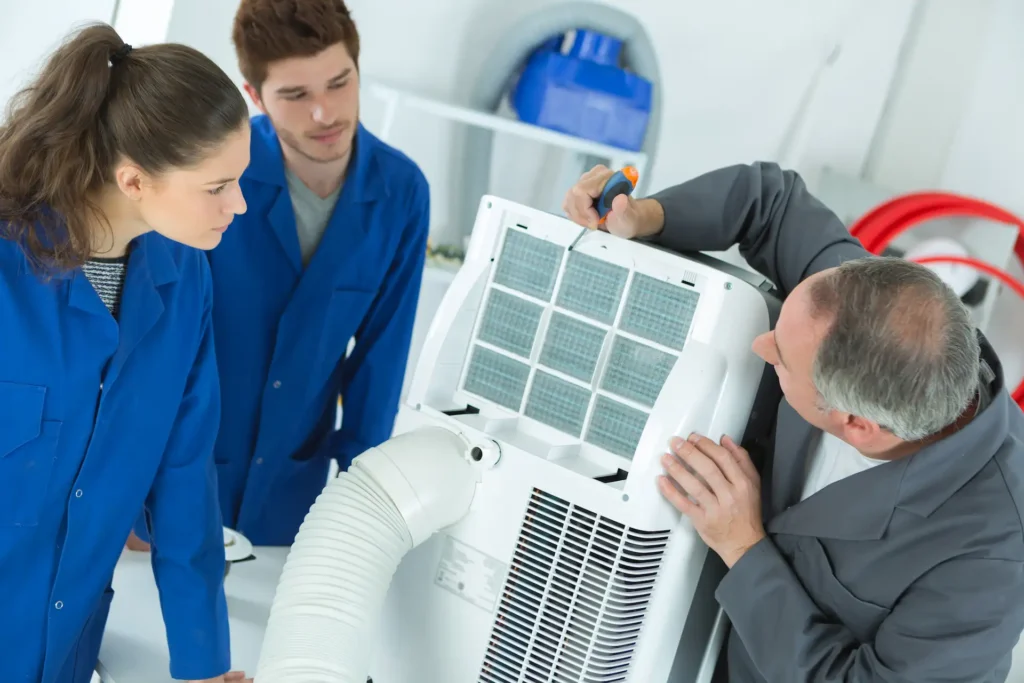
Five Star Heating, Cooling, Plumbing & Electrical helps Palatine homeowners compare air purification options based on the indoor conditions they want to improve. Dust, odors, and concerns about airborne particles do not all call for the same equipment. A useful assessment starts with the source, the rooms affected, and the way air moves through the home. We can help you understand the difference between filtration and other air-cleaning methods, then review compatibility and maintenance before recommending a system.
Call (847) 250-6610 to discuss your concerns and ask about the next available appointment.
Begin With the Indoor Air Concern
Describe the problem as specifically as possible. Dust returning quickly, an odor near one room, or a concern that began after construction provides more useful information than simply asking for cleaner air. Cooking, outdoor air, moisture, pets, and household activities can contribute different substances. A device that captures particles may not address a gas or an odor source, and no single air purifier can solve every indoor environmental concern.
Our indoor air quality testing service can help guide an evaluation when there is a defined issue to investigate. The assessment should distinguish a possible source problem from a need for air-cleaning equipment. A leak, damp material, or combustion concern needs its own appropriate response. Adding a purifier should not delay correcting the underlying condition or create the impression that the source no longer matters.
Filtration and Purification Are Not Interchangeable
Mechanical filters capture particles as air passes through them. Other products may use electronic or additional treatment methods, with different capabilities and limitations. Compare the actual technology and product documentation rather than relying only on terms such as advanced or whole-home purification. A product designed for one type of pollutant may have limited value for another. The installation location and operating time also affect how much air reaches the equipment.
Our air cleaner services can help explain these options in the context of your HVAC system. Five Star reviews the practical requirements of the selected equipment, including access, power, and servicing. Ask what the product is intended to reduce and under what conditions its claims were measured. A useful recommendation connects those details to your concern without promising that the device will eliminate every odor, particle, or health risk.
Match Filtration to the Airflow Available
A whole-home air-cleaning system depends on the air that moves through the HVAC equipment. Filter dimensions, cabinet fit, blower performance, and the resistance created by the filter all matter. A filter with a higher rating is not automatically appropriate for every system. If airflow is reduced too much, comfort and equipment operation can suffer. The goal is suitable particle capture while preserving the airflow the heating and cooling system requires.
Correct filter fit and regular replacement remain important even when another purification device is installed. Our air filter services can help review compatible choices and replacement needs. Gaps around a poorly fitted filter allow air to bypass the media. A clogged filter creates a different problem. Both conditions can undermine a plan that otherwise uses suitable equipment, which is why basic system condition should be checked before adding accessories.
Portable and Whole-Home Options Serve Different Needs
A portable unit treats air in the room or area where it operates. A whole-home device works through the central system and depends on that system’s airflow and operating arrangement. A room-specific concern may call for a different approach from a concern throughout the home. Consider the occupied space, noise, placement, filter costs, and maintenance access when comparing options rather than assuming that the larger installation is always the more useful one.
In Palatine, indoor conditions can change between winter heating and summer cooling. Closed windows, different occupancy patterns, and seasonal moisture may change what you notice. Source control and suitable ventilation remain part of the plan alongside air cleaning. If equipment is chosen, use its documented sizing and operating guidance. Avoid assuming that a device placed in one corner of a large open area will perform the same way as it does in a smaller test room.
Installation, Product Review, and Ongoing Service
Before installation, review the equipment model, intended function, electrical requirements, and maintenance schedule. Products that intentionally generate ozone should not be used as a solution for occupied living spaces. For electronic technologies, ask about relevant emissions testing and limitations. No installation should rely on unsupported medical promises. The decision should remain focused on the documented function of the equipment and the actual conditions it is intended to address.
Routine AC maintenance and tune-up service can help keep the surrounding HVAC system in working order. Product-specific filters, lamps, or other components still need attention according to their instructions. Keep the model information and service records. If the original concern persists, reassess the source and operating conditions instead of increasing settings or adding more devices without understanding why the first approach did not provide the expected improvement.
Build an Air Quality Plan You Can Maintain
Before your visit, note the rooms affected, the timing of the concern, and any recent renovation, water intrusion, or equipment changes. Gather information about existing filters and air cleaners if it is readily accessible. Ask about ongoing replacement costs and the work required to maintain the selected product. An option that is easy to service consistently may be more useful than one with features you will not maintain or use.
Five Star helps Palatine homeowners compare air purification approaches with clear explanations of what the equipment can and cannot do. Open 24 hours a day, 7 days a week. Scheduling depends on availability and the evaluation required. Call (847) 250-6610 to discuss your indoor air concerns. We can help identify a practical next step and explain how filtration, system operation, and source-related improvements fit together in a manageable plan for your home.